Modern Mezuzah Cases: Design at the Doorpost
For generations, the mezuzah has marked the doorway of a Jewish home. The case around the scroll is where you get a say: the material, the color, the shape that makes it feel like your door and no one else's.
Some people call it a mezuzah cover; either way, it's the part of the mezuzah you choose with your eyes. Our modern mezuzah cases come from SURI's own studio and from independent Judaica artists, ranging from quiet matte forms to cases that make a point of being noticed.
A Guide to the Materials
Start with material, because it decides how the whole piece feels.
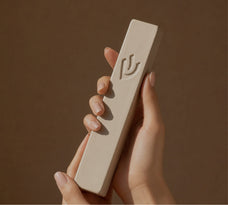
A concrete mezuzah is for people who like things pared back. It's matte and a little raw to the touch, and since each one is cast individually, no two come out quite the same. A white mezuzah melts softly into a pale doorframe; in black or gray, concrete draws a sharp, confident line.
If you're drawn to a stone mezuzah, there's terrazzo, flecked with chips of color, and our marble-finish designs, with soft veining over concrete or steel. A marble mezuzah feels at home next to marble counters, natural wood and warm neutrals.
Ceramic is the most personal of the materials. Every ceramic mezuzah carries a trace of its maker: a glaze that pools a little deeper on one side, an edge that's rounded rather than sharp. It brings warmth to a doorway, especially in a home full of texture and color.
And for clean lines, there's metal. Stainless steel and aluminum keep their edges crisp and their colors bright, while brass and gold tones echo a door handle, a lamp or a picture frame nearby.
Hanging it on a front door that faces the weather? Concrete, stainless steel and aluminum hold up best outdoors, and the Placement filter shows which cases are made for outdoor use.
Matching the Case to the Room
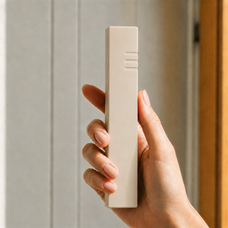
Look at the doorframe before you look at the case. A wide, painted frame can carry a chunky concrete piece; a slim, modern frame looks better with a narrow case that follows its line. Then decide whether the mezuzah should blend in or stand out. White on white is calm and almost invisible. Black on white, or a bright ceramic against a neutral wall, turns it into a small focal point.
Hardware is the easiest guide. Match a brushed gold handle with a gold-toned case, or let a matte black handle set the color for every door in the house.
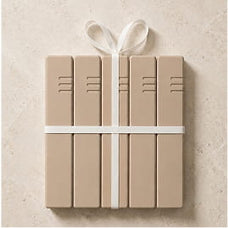
You don't need the same mezuzah case on every door. Many homes put a statement piece at the entrance and quieter cases inside, or keep one material throughout and change the color room by room. If you'd rather have it all match, our mezuzah sets do the coordinating for you.
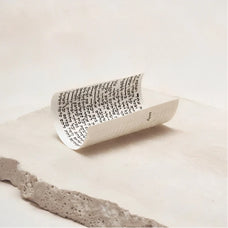
Once you've found the case, add a handwritten scroll from our Mezuzah Scrolls collection. Each case lists the scroll size it holds, and the All Mezuzahs page explains where and how to hang it.
Mezuzah Case FAQ
What does the letter Shin on a mezuzah case mean?
The Shin stands for Shaddai, one of God's names, which is also written on the back of the scroll. Many read it as an acronym for "Guardian of the doors of Israel." It's a tradition, not a requirement, so a case without a Shin is just as valid, and many modern designs leave it out for a cleaner look.
Is a marble mezuzah made of real marble?
Not always. Many of our marble mezuzah cases have a marble-look finish over concrete or stainless steel, which keeps them lighter and more affordable. Each product page states the material.
How do I care for a concrete or ceramic mezuzah case?
Wipe it with a soft, dry or slightly damp cloth and avoid harsh cleaners, which can dull a glaze or stain concrete. Check the product page for care notes specific to that design.
Can I mix different mezuzah cases in one home?
Yes. There's no rule that every door has to match. Choose each case for its doorway, and keep one thread running through, such as material, color or finish, if you want the house to feel connected.
Where can I buy a modern mezuzah case?
Right here at SURI. Browse mezuzah cases for sale by material, color, style and scroll size, from concrete and terrazzo to ceramic, metal and marble-finish designs. Orders from $150 ship free in the US.
Choose the case you'll be glad to see every time you come home. Explore SURI's modern mezuzah cases.