A mezuzah takes a few minutes to put up, but a few details matter: which side of the door, how high, which way it tilts, and the blessing you say just before. This guide walks you through each one, from rolling the scroll to the final press against the doorpost.
What You Need
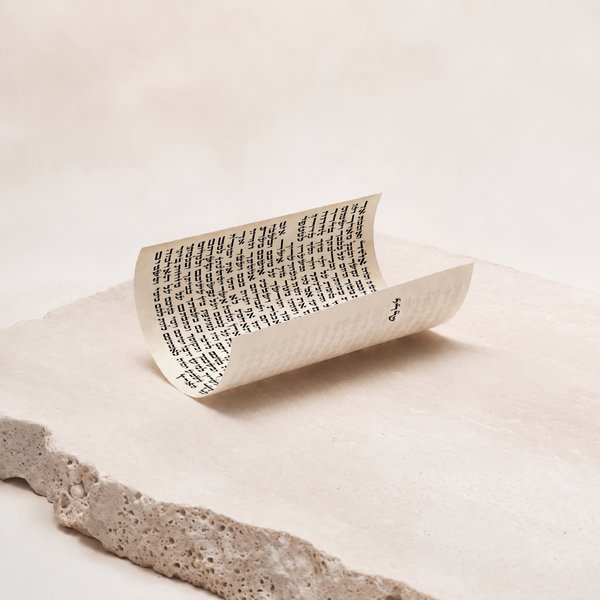
- A kosher mezuzah scroll. It must be handwritten on parchment by a trained scribe. A printed copy is decoration, not a mezuzah. Find certified, handwritten scrolls in our mezuzah scrolls collection, such as this kosher Sephardic mezuzah scroll in several sizes.
- A case that fits the scroll. Match the case to the scroll's height, not to the door. Every SURI case lists the scroll size it holds.
- A way to attach it. SURI cases come with double-sided adhesive, so you won't need a drill.
- A pencil, a tape measure and a cloth to mark the spot and clean the surface.

Where to Hang a Mezuzah
Which side of the door
The mezuzah goes on the right side of the doorway as you walk in. For the front door, that's your right as you enter the house. For a room, it's your right as you enter the room. If a doorway connects two rooms and it's unclear which way counts as "in," ask your rabbi.
How high
Hang it in the upper third of the doorpost. On a standard 80-inch door, the upper third starts at about 53 inches from the floor, roughly shoulder height for most adults. Many people hang it right at the start of that upper third. Avoid the top 3 inches of the frame.
How close to the opening
Place the mezuzah on the doorpost itself, on the edge closest to the outside of the doorway, within about 3 inches of the opening.
Which way it tilts
In the Ashkenazi tradition, the mezuzah is slanted, with the top pointing into the room or house and the bottom pointing out. In the Sephardic tradition, it hangs straight up. Both are correct. Follow your family's custom.

How to Hang a Mezuzah, Step by Step
- Measure and mark. Find the start of the upper third of the doorpost on the right side, and mark it lightly in pencil.
- Clean the surface. Wipe away dust and grease so the adhesive grips properly, and let it dry completely.
- Roll the scroll. Roll it from the left edge toward the right, so the opening word, Shema, ends up on the outside. Outdoors, many people slip the rolled scroll into a thin plastic sleeve for extra protection.
- Place it in the case. Slide the scroll in with the top of the text toward the top of the case. Never fold or trim a scroll to make it fit.
- Say the blessing. Recite it just before you attach the mezuzah (see below).
- Attach the case. Peel off the adhesive backing, line the case up with your mark at the angle of your custom, and press firmly against the doorpost.
- Continue to the next door. Hanging several mezuzahs? One blessing before the first covers them all. Try to move straight from one door to the next without unrelated conversation in between.

The Mezuzah Blessing
The blessing is short, and it's the same for every doorway in the house:
בָּרוּךְ אַתָּה ה' אֱלֹהֵינוּ מֶלֶךְ הָעוֹלָם, אֲשֶׁר קִדְּשָׁנוּ בְּמִצְוֹתָיו וְצִוָּנוּ לִקְבֹּעַ מְזוּזָה
Transliteration: Baruch atah Adonai, Eloheinu melech ha'olam, asher kid'shanu b'mitzvotav v'tzivanu likbo'a mezuzah.
Translation: Blessed are You, Lord our God, Sovereign of the universe, who has made us holy with His commandments and commanded us to affix a mezuzah.
When people search for a "mezuzah prayer," this blessing is usually what they mean. The longer text, the Shema and the passage that follows it in Deuteronomy, is already written on the scroll inside the case.

When to Hang Your Mezuzahs
Ideally, as soon as you move in. In Israel, mezuzahs go up right away. Outside Israel, tradition gives renters up to 30 days. Many families turn the moment into a small housewarming, a chanukat habayit, with friends and family. Looking for something to bring? See our Jewish housewarming gift ideas.
Hanging a Mezuzah Without Nails
Adhesive mounting is the easiest option for rentals, metal frames and glass doors, and for anyone who'd rather not drill into a painted frame. For a front door that faces sun and rain, choose a sealed concrete, terrazzo or stainless steel case from our outdoor mezuzah cases, like the sculpted Wave concrete mezuzah. Doing the whole house at once? Mezuzah sets pair one entrance case with matching cases for the rooms inside.
Once the doorposts are done, the rest of the house can follow. Find more ideas in our guide to Jewish home decor, or browse all mezuzahs to find the one you'll be glad to pass every day.