Hanukkah traditions come down to eight nights of candles, a very good excuse to eat jelly doughnuts, and a dreidel game that somehow gets competitive. Families light the menorah, eat fried favorites like latkes and sufganiyot, and play dreidel for gelt. Some nights add songs, small gifts, or tzedakah (charity). Hanukkah starts on the 25th of Kislev, in late November or December.
So much of Hanukkah happens at home, which means every family has its own version. Maybe yours sings every verse. Maybe everyone hangs out in the kitchen because the latkes taste best straight out of the pan. And somehow, everyone remembers whose turn it is to light the candles a little differently.
Here’s a look at where these Hanukkah traditions and customs come from, plus a few easy ideas for how to celebrate Hanukkah so each of the eight nights feels a little different.
The Story Behind Hanukkah
Hanukkah means “dedication” in Hebrew, and it goes back more than 2,000 years. A small group of Jewish rebels called the Maccabees took back the Temple in Jerusalem from Syrian-Greek rulers who had banned Jewish religious practice. When they went to rededicate the Temple, they found just enough pure olive oil to keep its lamp lit for one day. As the story goes, it burned for eight.
And that’s how we get eight nights of candle lighting, a menorah in the window so everyone passing by can share in the miracle, and a very good reason to fry another batch of latkes. The oil had a big night. We’re still celebrating.
Lighting the Menorah
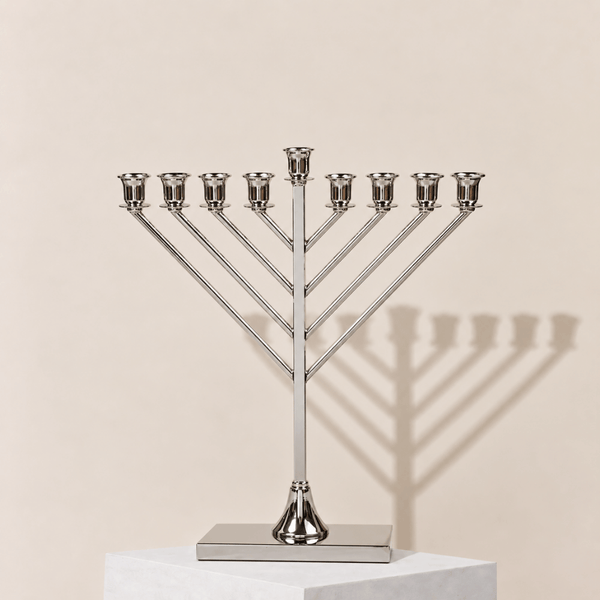
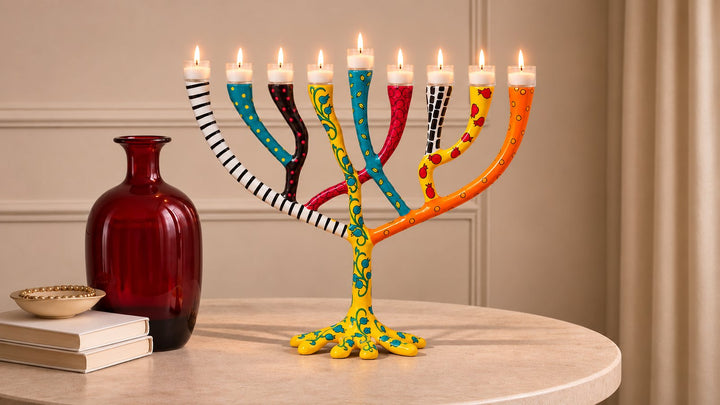
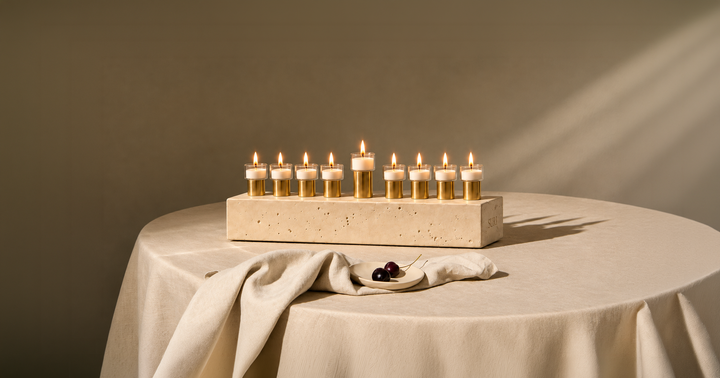
Lighting the menorah is the one tradition almost every family keeps. A Hanukkah menorah, also called a hanukkiah, has nine branches: one candle for each night, plus the shamash, the “helper” candle that lights all the others. You add one more candle every night, so by the end of the week, your menorah is completely full and looking very proud of itself.
Many families set it in a window facing the street, a custom called pirsum hanes, or “publicizing the miracle.” In some homes, everyone lights a menorah of their own, kids included, and the windowsill starts to look like a tiny skyline. The blessings and the candle order come with their own rules, and our step-by-step guide on how to light a menorah walks you through both. Once the candles are lit, many families sing Maoz Tzur, a traditional Hanukkah song. How many verses is up to you.

Hanukkah Foods
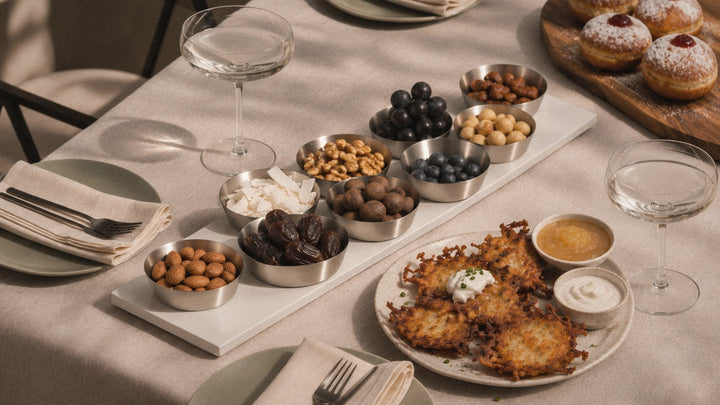
The miracle was all about oil, so it makes sense that Hanukkah food is fried food. Nobody has ever complained about this. Every Jewish community has its own favorites, and plenty of families put a few of them on the same table:
- Latkes: crispy potato pancakes from Eastern European Jewish kitchens. Applesauce or sour cream? Every family has picked a side, and nobody is switching.
- Sufganiyot: jelly doughnuts, the Hanukkah favorite in Israel. Powdered sugar on your sweater is basically part of the tradition.
- Bimuelos: Sephardic fried dough puffs, usually drizzled with honey or syrup.
- Sfenj: light, airy North African doughnuts.
- Keftes de prasas: Sephardic leek patties, for anyone who wants a vegetable on the plate (technically).
Some families also eat cheese and other dairy foods, one of the older Hanukkah customs, linked to Judith, a heroine from a story told around the holiday. A serving tip: pile everything on one big board or tray in the middle of the table. Hanukkah is a grab-another-latke kind of holiday, not a plated-dinner one.
Dreidel, Gelt and Games
The dreidel is a small four-sided spinning top, and somehow the most competitive thing on your table all week. Each side has a Hebrew letter: nun, gimel, hei, and shin. Together they stand for nes gadol haya sham, “a great miracle happened there.” In Israel, the last letter is pei, for “here,” because that’s where it happened. And in the game, each letter tells you what to do:

Nun means nothing happens, gimel means you take the whole pot, hei means you take half, and shin means you put one in.
The pot is usually Hanukkah gelt, Yiddish for “money.” Gelt can be real coins or chocolate ones wrapped in gold foil, and the chocolate kind rarely survives until the end of the game. Some families hand out gelt to the kids every night and ask them to set a little aside for tzedakah, which makes giving part of the fun.
Gifts and Family Traditions
Gifts are actually one of the newer Hanukkah traditions. American Jewish families started giving presents in the late 1800s, and before that, gelt was the gift. Today, a lot of families spread the gifts out across all eight nights, so every evening comes with a little something to unwrap after the candles are lit.
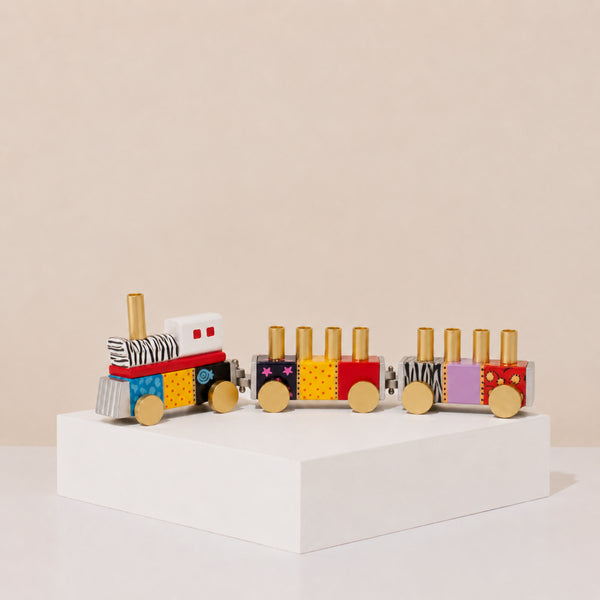
One gift that comes back every year? A menorah of their own. Kids take lighting very seriously when the menorah is theirs, and menorahs for kids come in shapes and colors that make the wait for sundown feel very long. The Train Menorah is hand-painted in bright enamel, so no two are exactly alike, and it turns the nightly lighting into a little ride for younger kids. Heading to family for a night of candles? Judaica gift sets make a host gift that stays on the shelf long after the latkes are gone.

Eight Nights of Hanukkah Traditions
Want every night to have its own thing? Here’s one way to do it. Take what works for your family, and skip the rest.
- Photo night. Take a family photo by the menorah, in the same spot every night. By night eight, you have a flip book.
- Latke night. Set out the toppings and let everyone build their own.
- Dreidel night. Hold a tournament, with chocolate gelt for the winner.
- Story night. Tell the Hanukkah story and let the kids act it out. Someone has to play the oil.
- Friends night. Invite friends or neighbors to light with you. More candles, more latkes.
- Giving night. Pick a cause together and give.
- Music night. Sing Hanukkah songs around the candles. Harmonies optional.
- Quiet night. Turn off the lights, put the phones down, and just sit with all eight candles.
Some communities call the sixth night Ner Shel Tzedakah, a candle dedicated to charity and justice. ReformJudaism.org suggests you set aside the sixth night for giving or for learning about a cause together.
Decorating a Jewish Home for Hanukkah
Hanukkah decor starts with the menorah, so decide where it lives first. A window facing the street? A sideboard? Right in the middle of the dining table? Once it has a spot, keep the area around it simple: a few pieces, nothing that can catch fire, and enough room for the candles to do their thing.
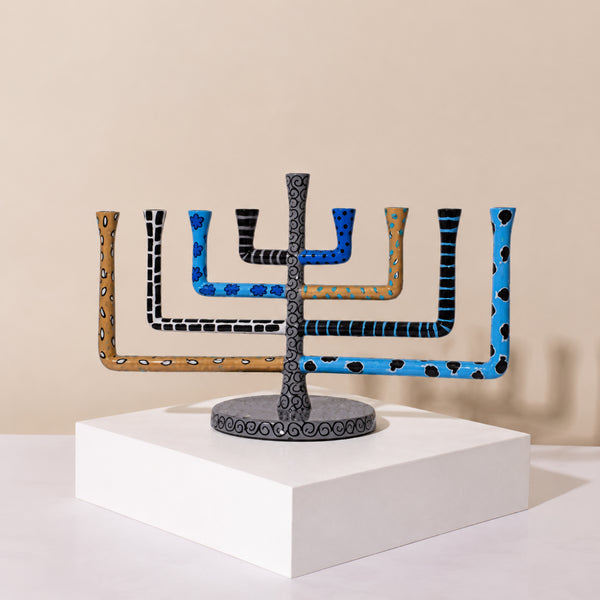
Materials make a bigger difference than you’d think. Concrete and stone tones feel grounded next to candlelight, brass and gold catch it, and glass doubles it. If the rest of your room is on the calm side, one colorful piece can carry the whole look. The Modern Menorah – Line is cast aluminum, hand-painted in enamel with bold geometric lines and patterns, so it looks like a small sculpture even when the candles are out.
- Set a tray or plate under the menorah to catch wax drips. Your wood table will thank you.
- Add blue and white textiles, like a runner, napkins, or a throw. They say Hanukkah without a single themed decoration.
- Fill a low bowl with dreidels and gelt for a centerpiece the kids are allowed to raid.
- Keep curtains, paper decorations, and the kids’ artwork well away from the flames, and never leave lit candles alone.
Every family ends up with its own mix of Hanukkah traditions. Same candles, different table, and a few new inside jokes every year. If you’re looking for the menorah your family will gather around for years, start with our modern Hanukkah menorahs and pick the one that feels like home.