Picture a menorah. Chances are you're imagining nine little flames in a winter window, a few drips of wax, maybe a dreidel spinning nearby. Lovely. Also, historically speaking, not the original. The first menorah had seven lamps, lived in the Temple in Jerusalem, and never once made it onto anyone's windowsill. Same name, same job (making light), two very different stories. Let's untangle them, decode what every branch and curve is trying to say, and see how today's designers are having fun with an ancient form.
The Menorah Meaning, Word by Word
Let's start with the name. Menorah (מְנוֹרָה) simply means lampstand in Hebrew, a close cousin of ner, a lamp or flame. No mystery there. The object itself, though, comes with quite the backstory.
It first appears in the Book of Exodus, where Moses receives some remarkably specific design notes for a golden lampstand. It started out in the Tabernacle, the portable sanctuary that traveled with the Israelites through the desert. Later it settled into the Temple in Jerusalem, where the kohanim, the descendants of Aaron who served there, lit it every day.
The instructions read like a detailed blueprint. A central shaft rising from a base. Three branches curving out on either side. Almond-blossom cups, knobs and flowers on each arm. Seven olive-oil lamps on top. And the showstopper: the whole thing was hammered from one single block of pure gold. No welding, no shortcuts. Possibly the most demanding commission in design history.
How the Jewish Menorah Became a Symbol
Some objects become icons on purpose. This one did it by surviving.
After the Temple was destroyed, the seven-branched lampstand became the best-known symbol of the Jewish people, carved and painted in synagogues and on tombstones across the ancient world. In Rome, the Arch of Titus still shows soldiers parading it away as war loot, which is one way to get immortalized in stone. Today it holds pride of place on the emblem of the State of Israel, framed by two olive branches, and a monumental bronze version stands outside the Knesset in Jerusalem.
A fun fact for your next holiday dinner: as a Jewish emblem, the menorah has a head start of many centuries on the Star of David, which only caught on widely in the Middle Ages.

What Does the Menorah Symbolize?
Short answer: a lot. Few objects have inspired this many interpretations, and four are worth knowing.
Seven branches
The classic reading ties the seven lamps to the seven days of creation, with the center light standing in for Shabbat. Rashi adds a lovely detail: the six outer wicks leaned toward the middle one. Six lights, one focal point. Any interior designer would approve.
Almond blossoms
The almond is the overachiever of the Land of Israel, flowering first, often before winter has even packed its bags. In Hebrew, shaked (almond) sounds a lot like shoked (watchful), a pun the prophet Jeremiah enjoyed long before puns had a reputation. The message: stay awake, something new is on its way.
One piece of gold
Seven lights, zero joints. Because the lampstand was beaten from one block of metal, many readers see it as a portrait of unity: distinct parts, one whole.
Light that faces outward
According to tradition, the Temple windows were built not to let daylight in but to send the menorah's glow out. Isaiah calls Israel "a light unto the nations," and the same instinct shows up every time a family parks its Hanukkah lamp in a street-facing window. Light, it turns out, is meant to be shown off.
Menorah vs Hanukkiah: 7 vs 9 Branches
Here's where things get confusing, and where you get to sound clever at parties.
The lamp you light on Hanukkah has its own Hebrew name: hanukkiah (חֲנֻכִּיָּה). It holds eight lights, one per night, plus a ninth, the shamash, whose only job is lighting the others.
Its story starts with the seven-branched original. When the Maccabees took back the Temple and rededicated it, they found just one small jar of pure oil, enough for a single day. It lasted eight. So the hanukkiah is, rather charmingly, a lamp that exists to remember another lamp.
Why not just light a seven-branched one at home? Because the Talmud forbids making exact replicas of the Temple vessels, the menorah included. That's why some families skip three-dimensional seven-branch pieces entirely, while flat images, like prints or embroidery, are generally fine.
The cheat sheet:
- Temple menorah: seven lamps, olive oil, lit daily by the kohanim in the Temple.
- Hanukkiah: eight lights plus the shamash, oil or candles, lit at home over eight nights.
So when you spot a 7 candle menorah, its meaning points back to the Temple, not to Hanukkah. And if you call your Hanukkah lamp a menorah? Totally fine. Most of the English-speaking world does. For the full lighting order and blessings, see our step by step guide.

What Each Part of the Hanukkiah Means
The eight lights
One for each day the oil refused to quit. Adding a flame every night comes from the School of Hillel, who taught that holiness should only ever go up. By night eight the entire row is ablaze, and so, usually, is the mood.
The shamash
Hanukkah lights are for admiring, not for using. No reading by them, no catching up on emails by them. Enter the shamash, the designated helper. It provides the usable flame and sits apart, raised, lowered or off to one side, so nobody counts it by mistake. Plenty of teachers see a lesson in humility here. We also see excellent staffing.
The row
The eight lights traditionally sit level in a straight line, so each night is easy to count and no flame gets to play favorite.
Modern Hanukkiahs: Old Symbols, New Forms
A hanukkiah works eight nights a year and, if you choose well, looks good on the shelf for all the others. So it makes sense to pick one the way you'd pick a piece of art. Today's designers keep the non-negotiables, eight lights and a shamash that stands apart, then play with everything else: material, color, silhouette, attitude.
One question we hear all the time at SURI: is a modern design still kosher for lighting? It's a fair one, and we're always happy to check a specific piece with you before you order. Many of our hanukkiahs are created by Israeli artists, cast in concrete or aluminum and finished by hand, and some are made to order, so yours may be made especially for your home.
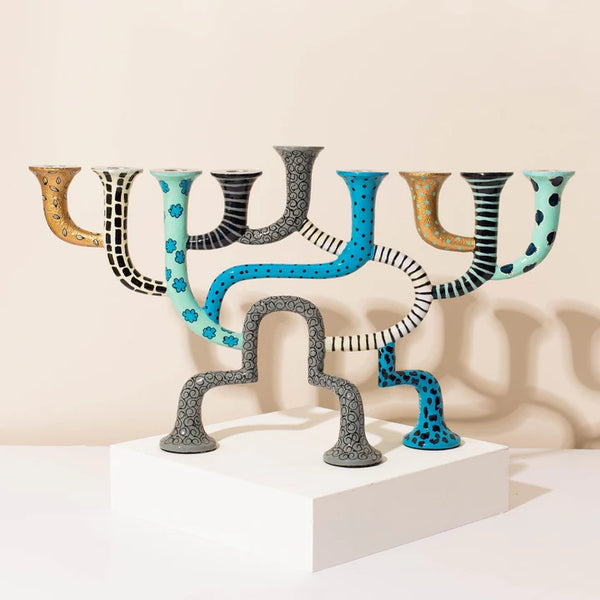
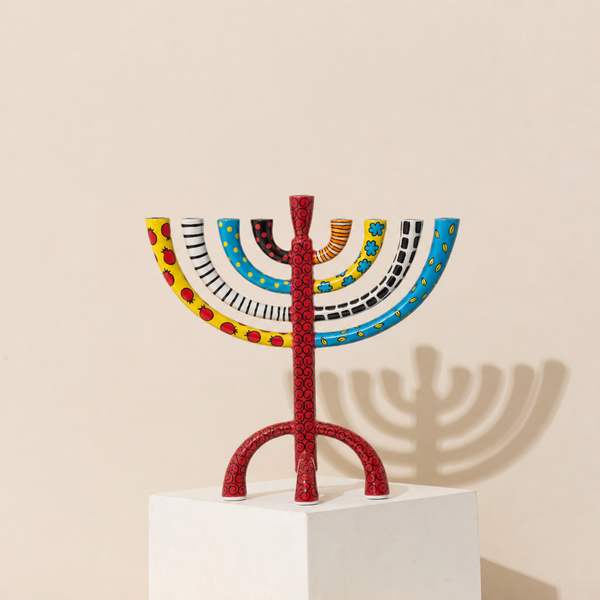
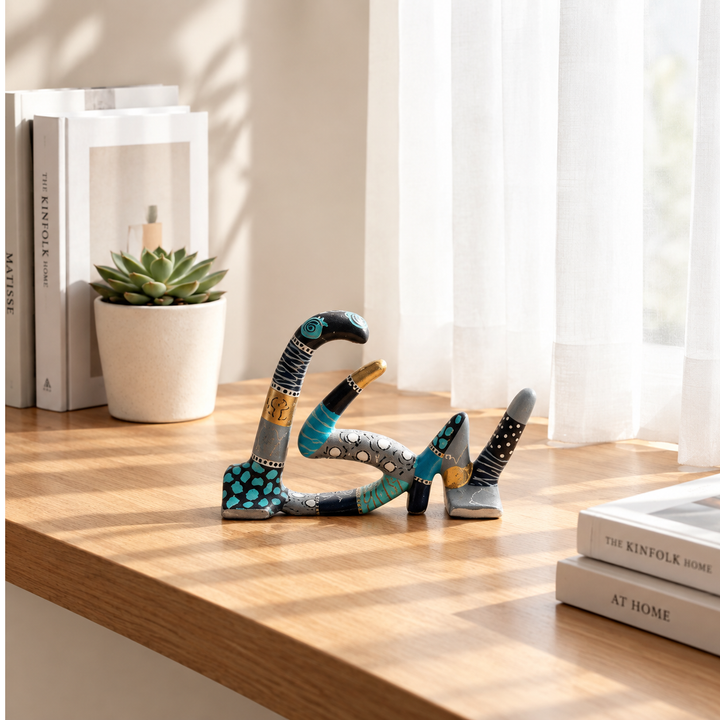
Take the Loopa Series Artistic Hanukkah Menorah, Hand-Painted Finish. Its branches loop and swirl as if caught mid-dance. It's cast in aluminum and finished by hand in enamel, in shades from sunny yellow to emerald green, and happily takes either oil or regular candles. At about 12.6 by 14.15 inches, it's built to be the centerpiece, and you can add matching wax candle cups for all eight nights. Your tablecloth will thank you.

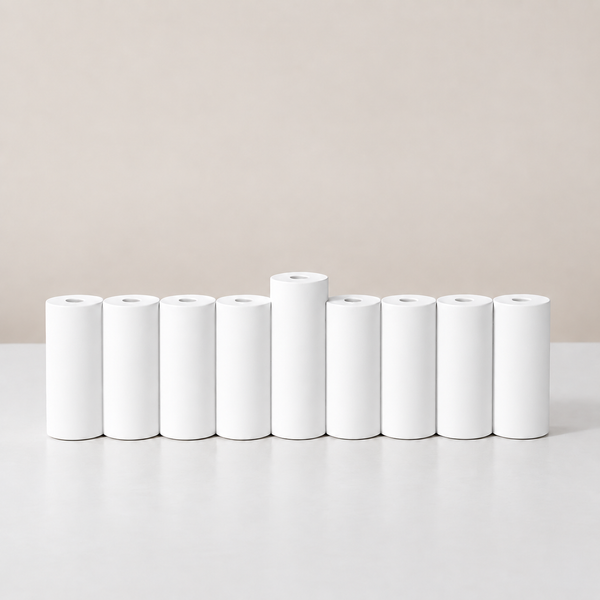
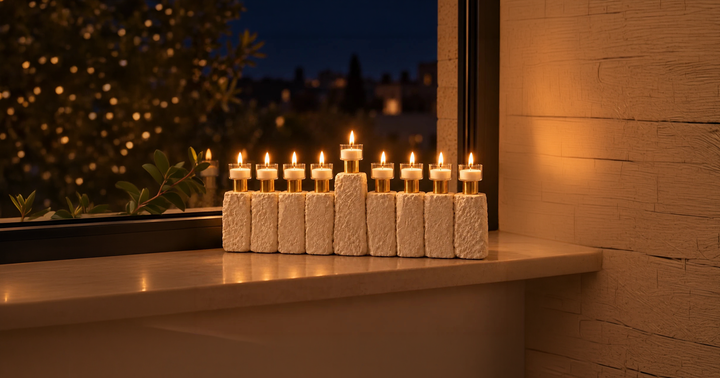
Prefer your Judaica cool and architectural? The White Concrete Menorah with Star of David from the COTEL design pairs two of the most iconic Jewish symbols in one handcrafted piece, cast from natural concrete and polished to a smooth white finish. Minimal, yes. Boring, never. For more shapes and textures, wander through the concrete menorah collection.

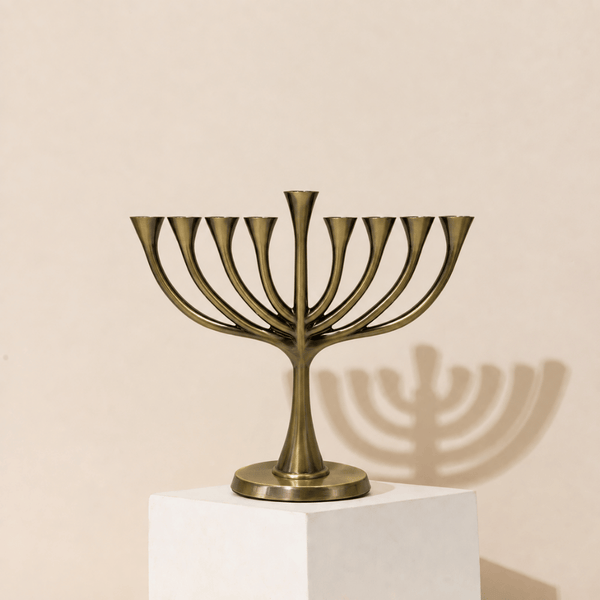
Craving a nod to that original pure-gold lampstand? Our gold menorahs bring the glow before a single candle is lit. Got an entryway, a big window or a community space to fill? Large menorahs are made to be noticed from across the room. And if you want to see it all, the full Hanukkah menorah collection is waiting.
One Lamp, Many Meanings
Seven branches or nine, gold or concrete, Temple or kitchen windowsill, the menorah has been saying the same thing for a very long time: light is better shared. Once it glowed in the Temple. Now it glows in homes everywhere, for anyone walking by. Not a bad run for a lampstand.